I suspect I’m not alone.
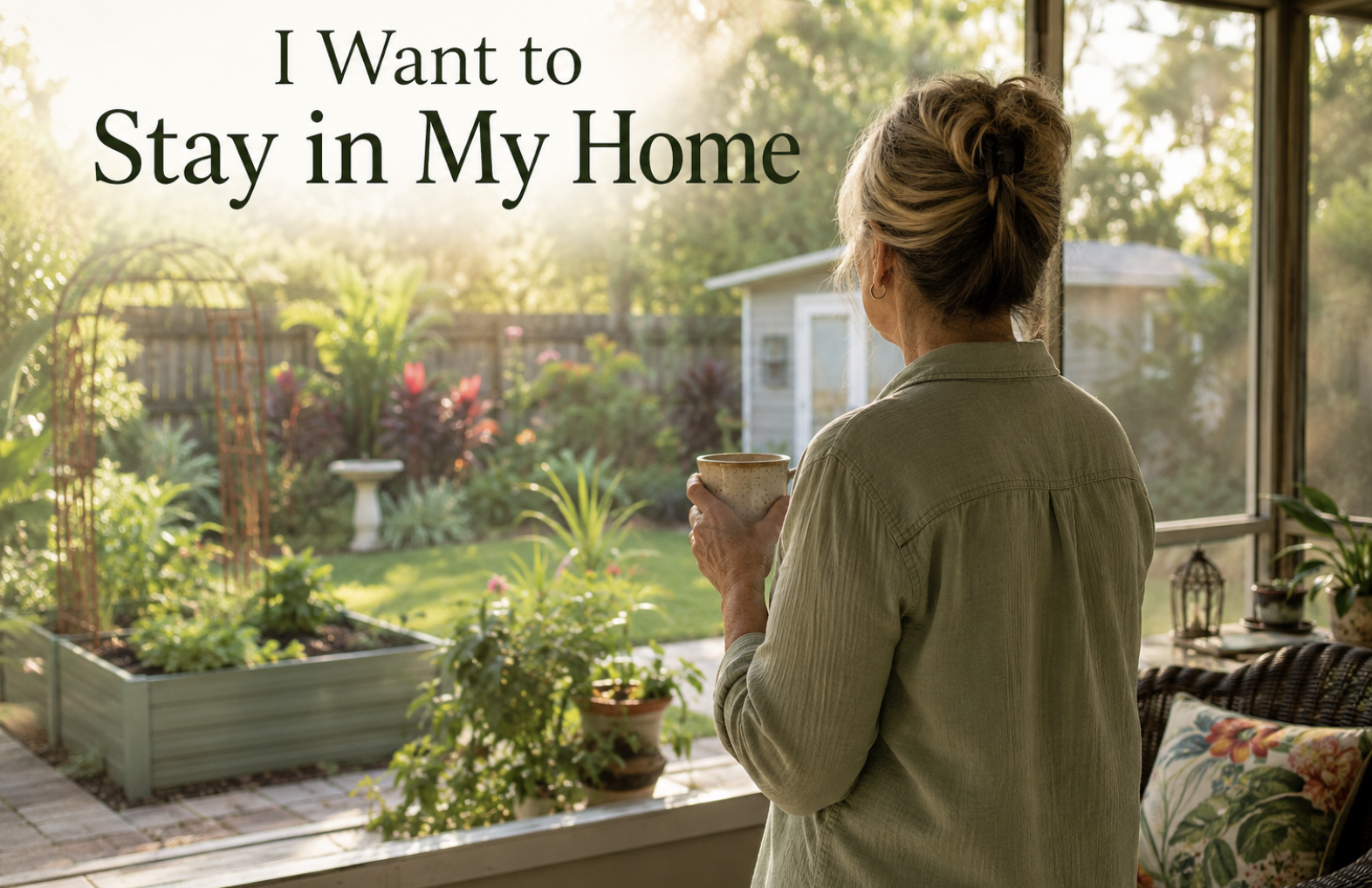
I want to putter in my garden. I want to sleep in my own bed. I want to make coffee in my own kitchen and complain about the weeds in my own backyard.
I want to decide what time I get up, what I eat for dinner and whether I spend the afternoon cleaning the house or ignoring it completely.
I want to remain independent for as long as I possibly can.
But wanting something and preparing for it aren’t quite the same thing.
We prepare financially for retirement. We prepare for hurricanes and power outages. We make wills and organize important papers.
Maybe we should also prepare for something most of us hope to do for a very long time:
Live safely and independently in our own homes.
The National Institute on Aging calls this aging in place — remaining in your own home as you get older. And it points out something that sounds very familiar to me: the best time to think about what we may need later is before we need it.
So I’ve started asking myself some questions.
Not all of them are particularly comfortable.
But they’re worth asking.
If I Fall, Can I Get Off the Floor?
Many years ago, I had a neighbor who could be very pleasant — or not so very pleasant.
One day, I noticed that her mail was piling up.
That wasn’t normal.
I asked my son to get the mail and bring it into the house. Then I started thinking about it.
Well, that was rather presumptuous of me.
I decided I should call her and leave a message explaining that we’d picked up her mail so she wouldn’t be upset.
She answered the phone.
I heard a very tiny voice.
“Help me. Please help me.”
She had fallen days earlier and broken her hip.
Somehow, over those days, she had managed to crawl her way to the telephone. She happened to reach it in time to answer when I called.
I called 911. Paramedics came, broke into her home and took her to the hospital.
I’ve never forgotten that little voice.
And now that I’m older myself, I’ve thought about that day differently.
What if she hadn’t reached the phone?
What if I hadn’t noticed the mail?
What if I hadn’t called?
Which brings me to a question I think we should ask ourselves:
If I ended up on the floor today, could I get back up?
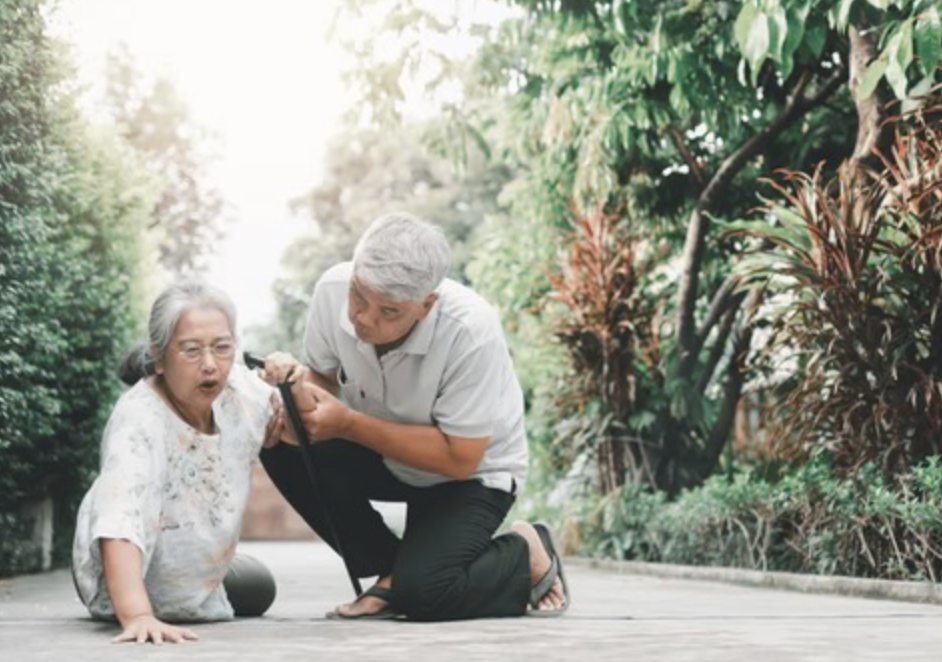
Falls aren’t the subject of this article, but they’re a good example of how quickly independence can change. A serious injury such as a broken hip can make it difficult for an older adult to return to living independently.
Strength and balance matter.
So perhaps one of the best investments I can make in my home isn’t something I buy for the house at all.
Maybe it’s keeping me strong enough to live in it.
If I Couldn’t Get Up, Could I Call for Help?
My neighbor eventually reached her telephone.
Would I?
Like most people, I carry my phone around with me — until I don’t.
It’s charging in another room. It’s sitting on the kitchen counter. It’s buried in my purse.
That has made me think about whether I need another way to call for help.
Maybe it’s a smartwatch.
Maybe it’s a medical alert device.
Maybe it’s a voice-activated device.
The answer will be different for each of us.
The important question is simpler:
If I needed help and couldn’t get to my phone, how would I get it?
That’s something I’d much rather figure out now than from the floor.
Who Would Notice If Something Was Wrong?
This may be the question from my neighbor’s story that stays with me most.
Her mail was piling up.
Something in her normal routine had changed, and someone noticed.
Who would notice for me?
Who would think it was strange if I didn’t answer the phone? Who would notice if I missed something I normally never miss?
And who do I notice?
We tend to think of independence as not needing anybody.
I’m beginning to think that’s the wrong definition.
Maybe independence also means building a circle of people who look out for one another.
A neighbor.
A friend.
A family member.
Someone from church.
Someone who has your phone number and knows that if you suddenly disappear from your normal routine, they should check.
That’s preparedness, too.
Is My House Helping Me Stay Independent?
This is where we usually hear about grab bars.
And yes, grab bars may eventually be part of the answer.
But I want to look at my entire house.
Can I get in and out easily?
Are there places where I’m likely to trip?
Is there enough light at night?
Can I safely get in and out of the shower?
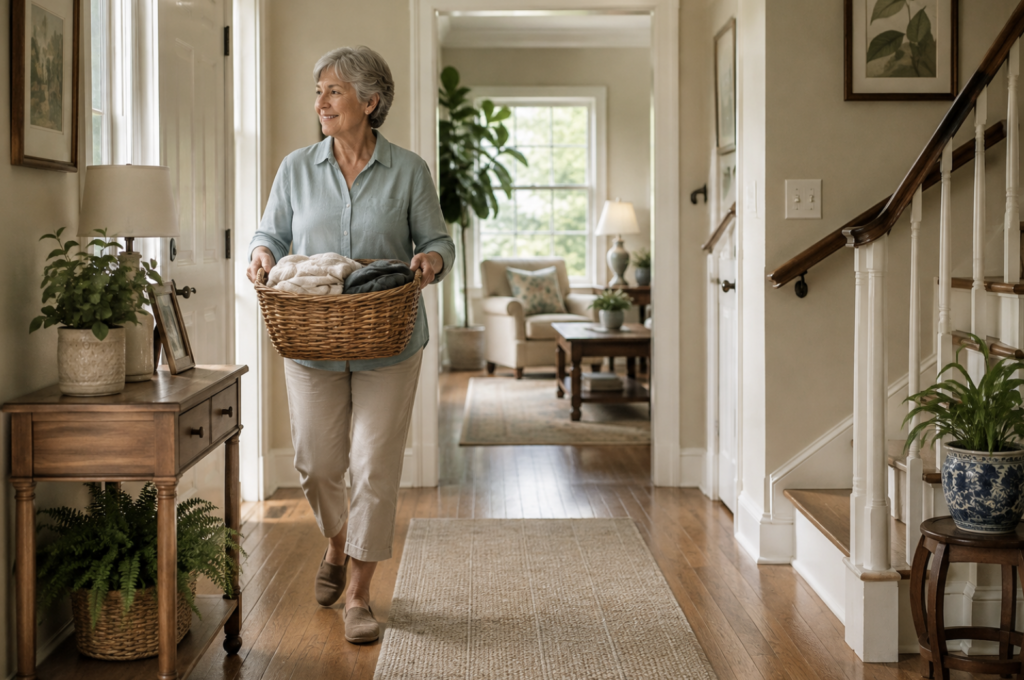
Can I reach the things I use regularly?
What about laundry?
What about stairs?
What about maintaining the yard?
The National Institute on Aging recommends looking at the home room by room and correcting problems such as poor lighting, loose rugs and unsafe bathrooms.
Some changes cost almost nothing.
Others may require planning and money.
That’s another reason to look around before there’s a crisis.
I don’t need to turn my house into a nursing facility because I’m getting older.
I do need to notice when my house is making everyday life harder than it needs to be.
The National Institute on Aging has a simple home safety infographic that can help you take a fresh look at your own home and spot changes that might make it safer and easier to navigate.
Am I Strong Enough to Live the Life I Want?
This one may be harder than installing a grab bar.
Can I get out of a chair easily?
Can I carry groceries?
Can I carry a laundry basket?
Can I get myself off the floor?
Can I walk far enough to get where I need to go?
Could I carry what I needed if I had to evacuate?
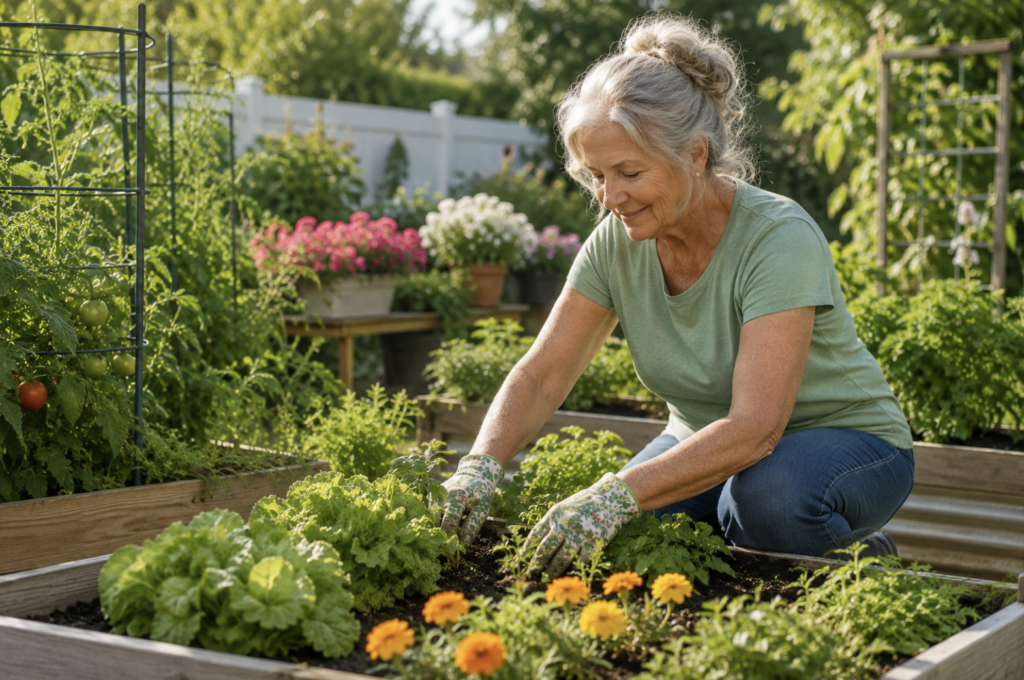
We lose something important when we think of exercise only in terms of weight or appearance.
Strength is independence.
Balance is independence.
Mobility is independence.
Gardening, walking, resistance exercises, lifting weights — they aren’t just about “getting in shape.”
They’re about being able to keep doing the things that make my life my life.
And sometimes, they’re about being able to do what an emergency may require of me.
I’ve thought about this before from a preparedness perspective, too — what being an out-of-shape person could mean when an emergency requires more from our bodies than an ordinary day does.
I don’t need to be an athlete. But I do want my body to be something I can depend on.
What Happens If I Can’t Drive Someday?
This one doesn’t get nearly enough attention.
Suppose I’m perfectly capable of living in my house, but I can no longer drive.
How do I get groceries?
How do I get to the doctor?
How do I pick up a prescription?
How do I get to church, visit a friend or go somewhere simply because I want to?
The CDC’s MyMobility Plan encourages us to think about transportation alternatives before we need them.
That makes sense.
Maybe it’s family or friends.
Maybe it’s public transportation.
Maybe it’s a rideshare service.
Maybe more things get delivered.
The exact solution isn’t important today.
Knowing that I have options is.
Can I Afford to Stay Here?
A paid-off mortgage — if we’re fortunate enough to have one — doesn’t make a house free.
There are property taxes.
Insurance.
Utilities.
Air conditioning.
Plumbing.
A roof.
Appliances that seem to know precisely when the household budget can’t afford for them to die.
And there may eventually be expenses that make staying home easier: lawn care, housekeeping, transportation or help with things we once did ourselves.
So aging in place isn’t only a health decision.
It’s a financial preparedness decision, too.
What will it realistically cost me to stay here?
And what can I do now to make that easier later?
Could I Manage Here During an Emergency?
This is where aging in place and traditional emergency preparedness collide.
Could I manage several days without electricity?
What if the air conditioning stopped during extreme heat?
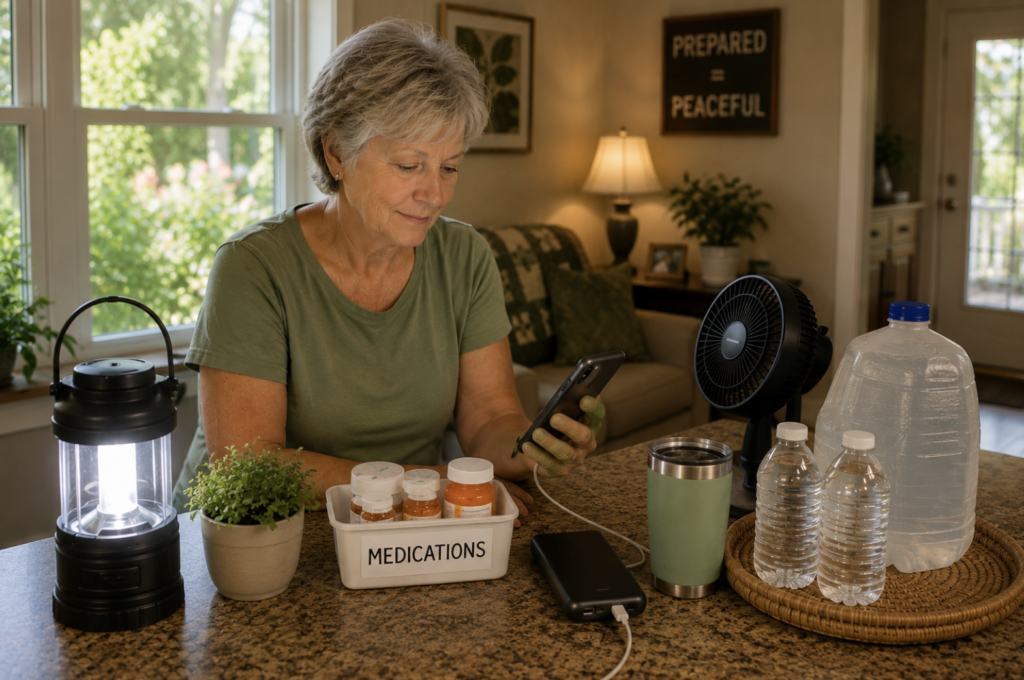
Can I lift my emergency water?
Could I evacuate on my own?
If I couldn’t drive, who would take me?
What happens to medications or medical equipment during a power outage?
Do the people I might depend on know that they’re part of my plan?
An ordinary Tuesday and a hurricane evacuation are two very different tests of independence.
If I want to stay in my home as I get older, my emergency plan may need to change as I do.
Who Are My People?
Maybe this should be one of the first questions instead of one of the last.
Who has a key to my house?
Who is my emergency contact?
Who knows where my important information is?
Who could help me if I couldn’t drive for a few weeks?
Who could pick me up if I had to evacuate?
And whose list am I on?
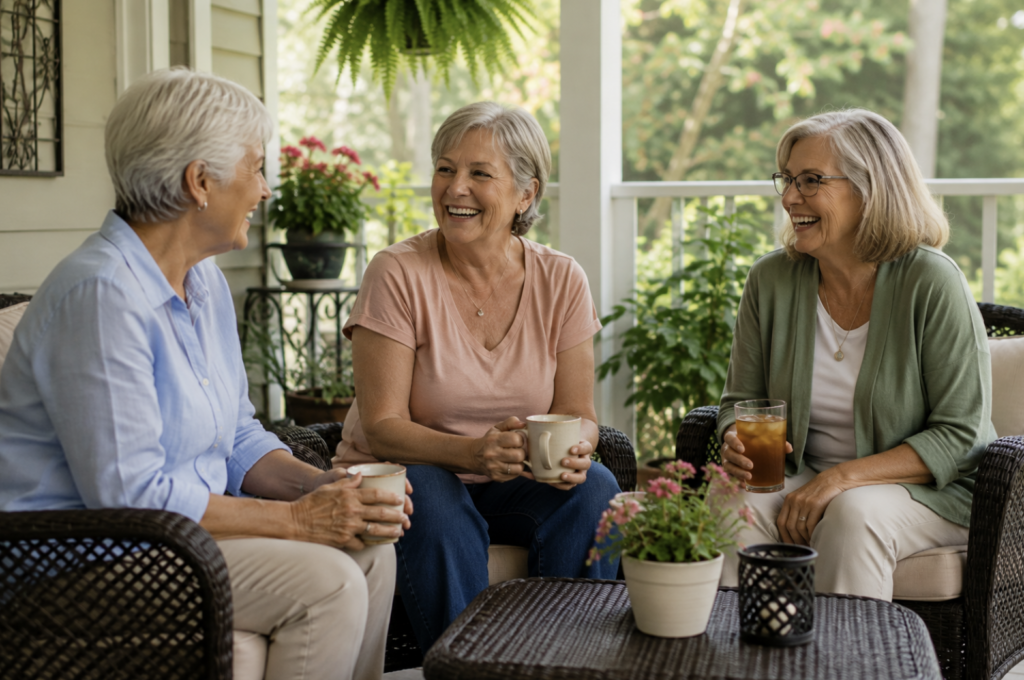
One of the things I’ve learned from preparedness is that self-reliance doesn’t have to mean doing everything alone.
Community is a form of preparedness.
What If Staying in My Home Is No Longer the Best Choice?
This may be the hardest question.
Because I want to stay here.
But I also know there may come a day when that’s no longer the wisest choice.
Maybe maintaining the house becomes too much.
Maybe I need more help than I can reasonably receive here.
Maybe I’m lonely.
Maybe I’m no longer safe.
Maybe a different home would actually give me more independence rather than less.
The National Institute on Aging acknowledges this, too. Most people want to remain at home as long as possible, but there can come a time when living alone is no longer safe or comfortable.
I don’t particularly like thinking about that.
But pretending it could never happen isn’t preparation.
My goal isn’t necessarily to stay in this particular house at all costs.
My goal is to have as much independence, dignity and choice as I possibly can for as long as I possibly can.
And maybe preparing to stay in our homes also means preparing ourselves for the possibility that someday, the wisest choice may be to leave them.
What I’m Asking Myself About Aging Place
I don’t need to solve the next 20 years today.
But I can start paying attention — to whether I can get myself off the floor, to who would notice if something happened to me, to one thing in my home I could change to make it safer, to what I’m doing to protect my strength and balance, and to what I’d want the next chapter to look like if I ever needed more help than I can get here.
That last one may be the most difficult.
But perhaps there’s some peace in thinking about it while the choices are still ours to make.
Preparedness isn’t only about having enough water when the power goes out or knowing where you’ll go when a hurricane comes.
Sometimes preparedness is looking ahead at our own lives and asking:
What can I do today to give my future self as many good choices as possible?
I want to stay in my own home.
So maybe it’s time I started preparing for that, too.