A few years ago, I went to renew my driver’s license.
I thought I had everything I needed. Then I discovered there was a problem.
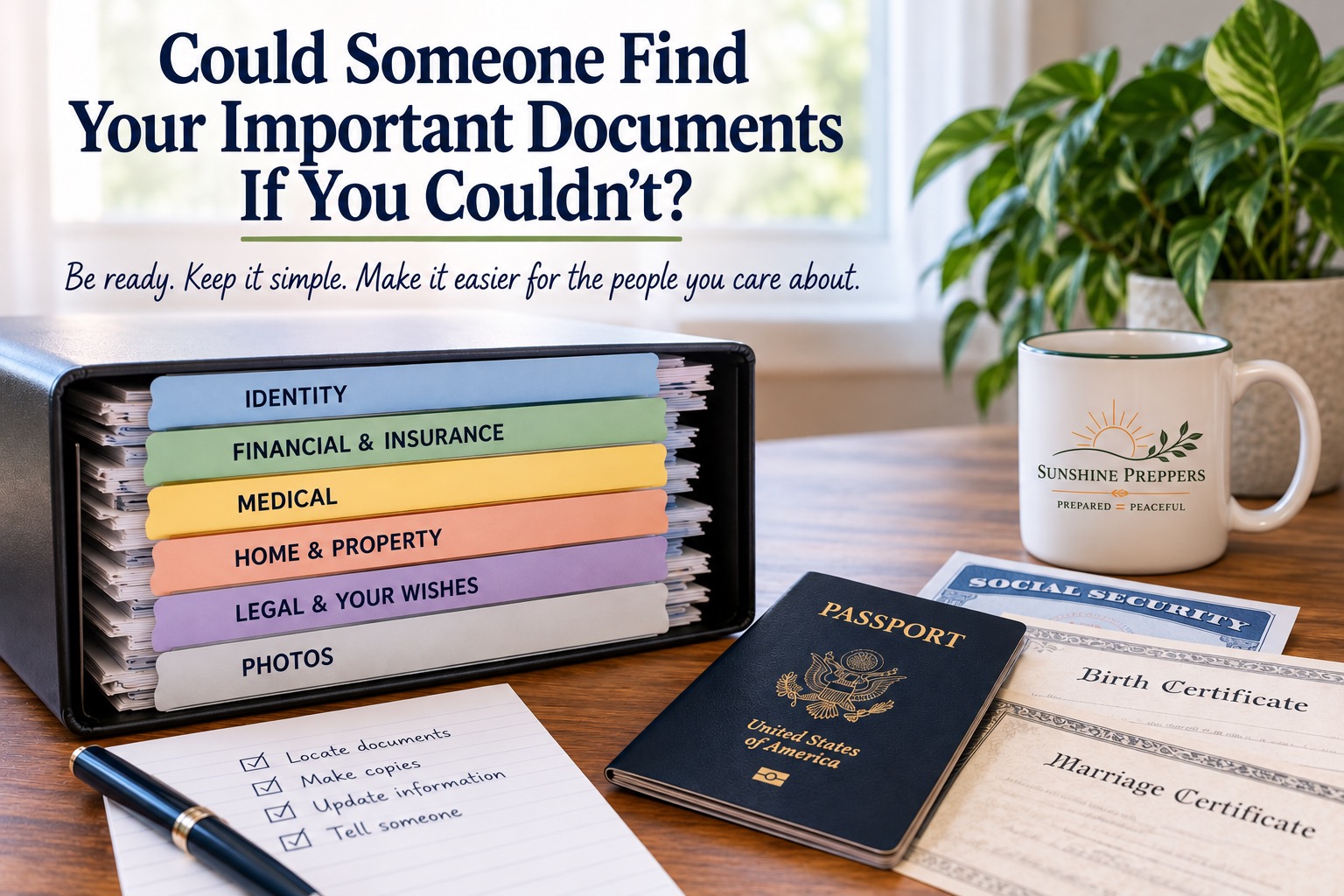
I have two different last names on some of my documents. Because my name changed when I got married, I needed my marriage certificate to prove the connection.
My marriage certificate.
Where exactly was that?
I eventually found it, but not before making a second trip to finish renewing my license.
It was an inconvenience, not an emergency. But it made me think:
Could I find an important document quickly if I really needed it?
And maybe the more important question:
Could someone else find it if I couldn’t?
That’s where organizing important documents becomes part of preparedness.
This Isn’t Just About Hurricanes
When we talk about emergency documents, it’s easy to picture an evacuation.
And living in Florida, that’s certainly one reason I want my important information organized.
But plenty of ordinary emergencies can leave us suddenly needing important information.
A hospitalization. An accident. Damage to the house. An insurance claim. A family emergency.
Or simply an unexpected situation where someone else has to step in and handle things for a while.
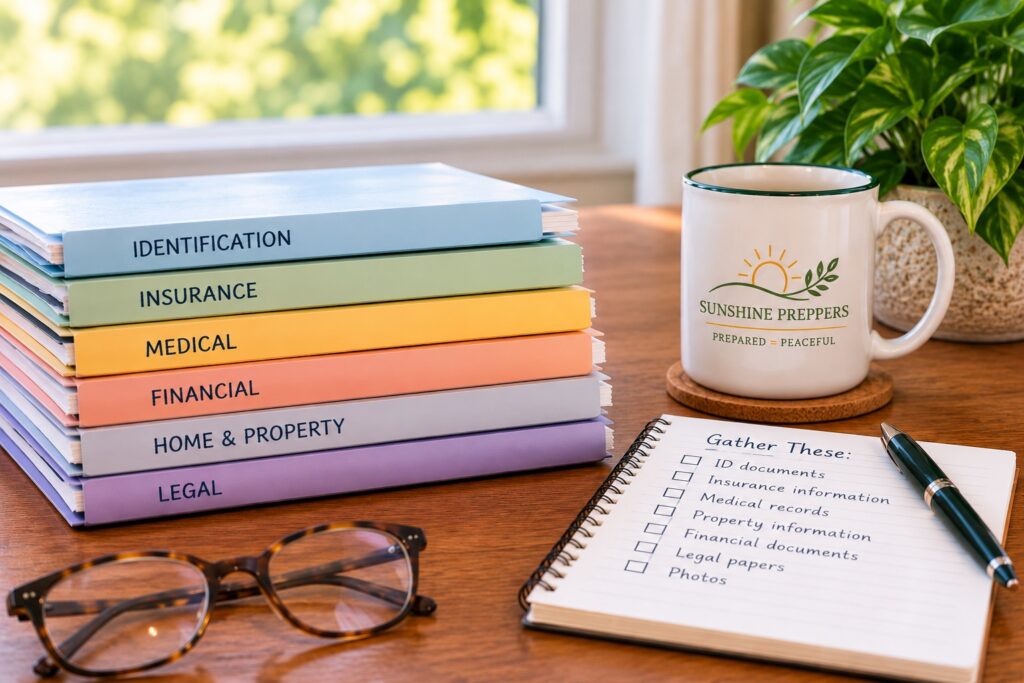
Organizing your important documents isn’t about creating the perfect filing system.
It’s about being able to find important information when you need it.
So What Should We Have?
Documents That Prove Who You Are
Start with the basics:
- Birth certificates
- Social Security cards
- Driver’s licenses or state identification
- Passports
- Marriage certificates
- Divorce documents
- Adoption or foster records, when applicable
- Citizenship or naturalization papers
- Military records
You may not need these very often.
That’s exactly why they can be so difficult to find when you suddenly do.
My marriage certificate was a perfect example. I hadn’t needed it in years—until suddenly I did.
Financial and Insurance Information
You don’t need a giant stack of bank statements.
What you do need is enough information for you—or someone helping you—to know what you have and where to find it.
That might include:
- Bank and financial account information
- Homeowners or renters insurance
- Auto insurance
- Health insurance
- Life insurance
- Mortgage or lease information
- Recent tax records
- Retirement and investment account information
Think beyond the paperwork itself.
If you were hospitalized tomorrow, would the person helping you know which bills needed to be paid? What insurance company to call? Where you keep your accounts?
You don’t need to put every password and account number into an emergency binder sitting on a shelf. In fact, you should protect sensitive information carefully.
But someone you trust should know how to get the information they would need.
Medical Information
This may be some of the most useful information to have close at hand.
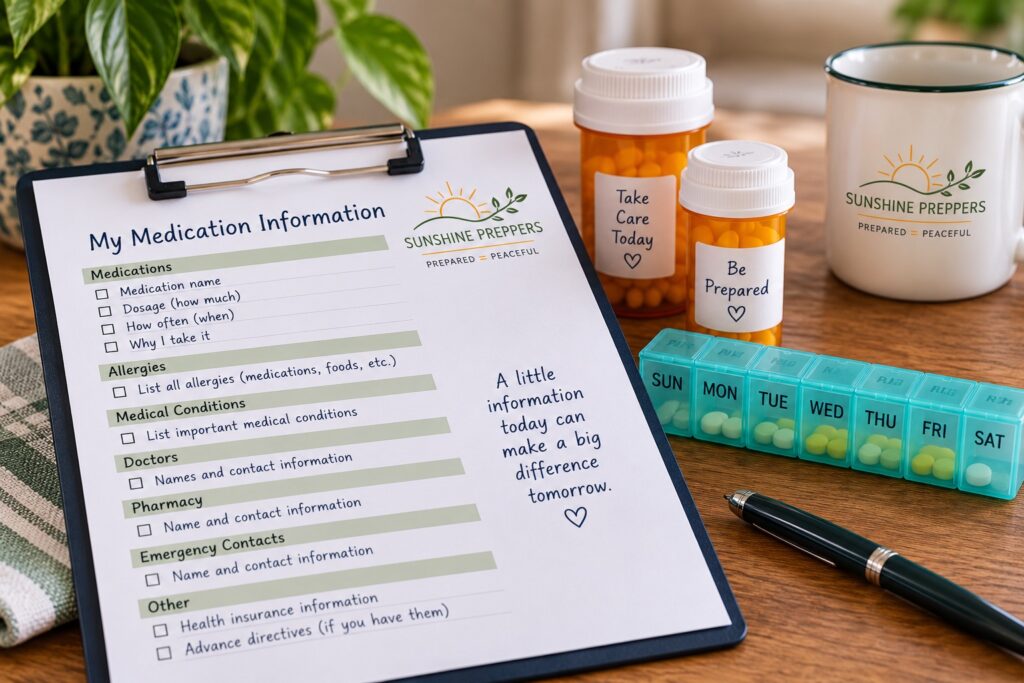
Keep a current list of:
- Medications and dosages
- Allergies
- Health insurance information
- Important medical conditions
- Doctors and their contact information
- Emergency contacts
- Advance directives or living wills, if you have them
This is also one category that needs regular updates.
A medication list from three years ago isn’t much help in an emergency.
And don’t assume you’ll always be the one answering the questions.
Home, Vehicle and Property Records
If a hurricane, fire, or another disaster damaged your home, would you have what you needed to start an insurance claim?
Consider keeping:
- Deed or mortgage information
- Lease information
- Vehicle titles or ownership records
- Homeowners or renters insurance
- Auto insurance
- Records for especially valuable belongings
- A basic home inventory
And that brings me to something I still need to do myself.
What About the Photos?
I have lots of photos.
What I don’t have is all of my important photos organized in one place where I could easily take them with me if I had to leave.
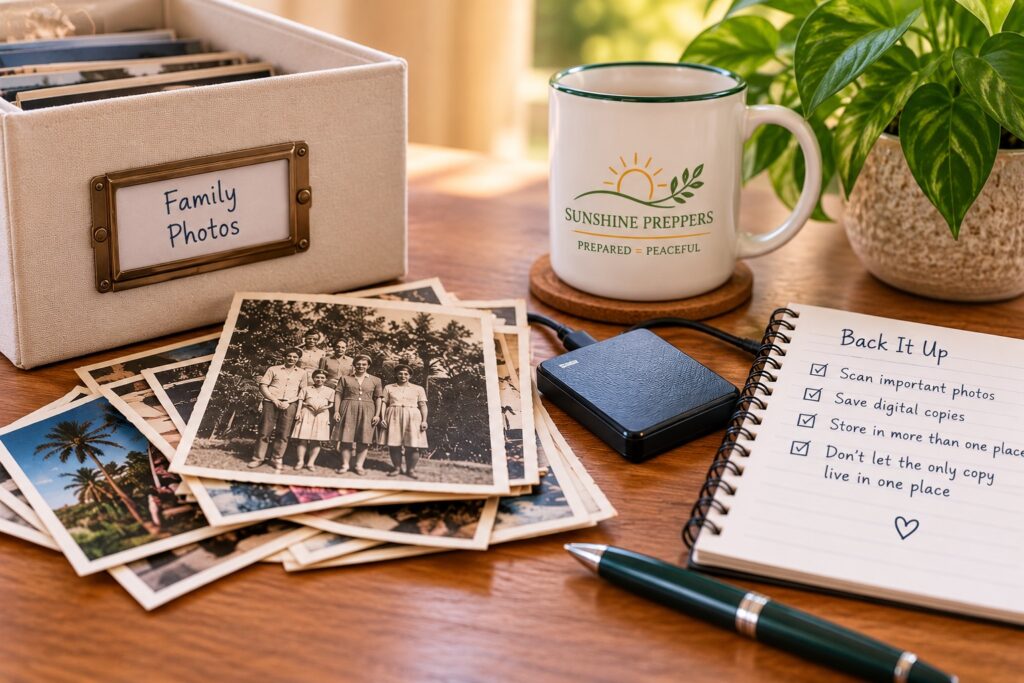
That’s on my own preparedness list.
I’ve written before about protecting important family photos and why they deserve a place in our preparedness plans. If your photos are scattered around like mine are, this is a good place to start getting them organized and protected.
Some photographs can’t be replaced. Photos also serve another preparedness purpose. Pictures of the rooms in your house, furniture, electronics, tools, and other belongings can help if you ever need to document what you owned.
Fortunately, this doesn’t have to mean carrying boxes of photographs out the door.
Digital copies give us another option.
Scan your irreplaceable family photographs. Take pictures or video of the contents of your home. Keep backups somewhere other than your phone or home computer.
The goal is simple: don’t let the only copy of something irreplaceable live in one place.
Legal Documents and Your Wishes
This is the category many of us would rather put off.
But it’s also where the question at the beginning of this post becomes especially important.
Could someone find what they needed if you couldn’t tell them?
Depending on your situation, this could include:
- Will or trust documents
- Power of attorney
- Advance healthcare directive or living will
- Beneficiary information
- Contracts or other important legal agreements
- Information about where you store original documents
You don’t necessarily need copies of every legal document in your emergency bag.
But the right people should know these documents exist and where to find the originals.
Originals, Copies and Digital Backups
Not every document should be stored the same way.
Some originals belong in a secure location. You can keep copies of frequently needed information somewhere easier to reach.
Digital backups give us another layer of protection.
I like thinking about it as three parts:
Protect the originals.
Keep irreplaceable original documents in a secure location.
Keep useful copies accessible.
Make sure you can find your emergency information without digging through years of paperwork.
Create a backup.
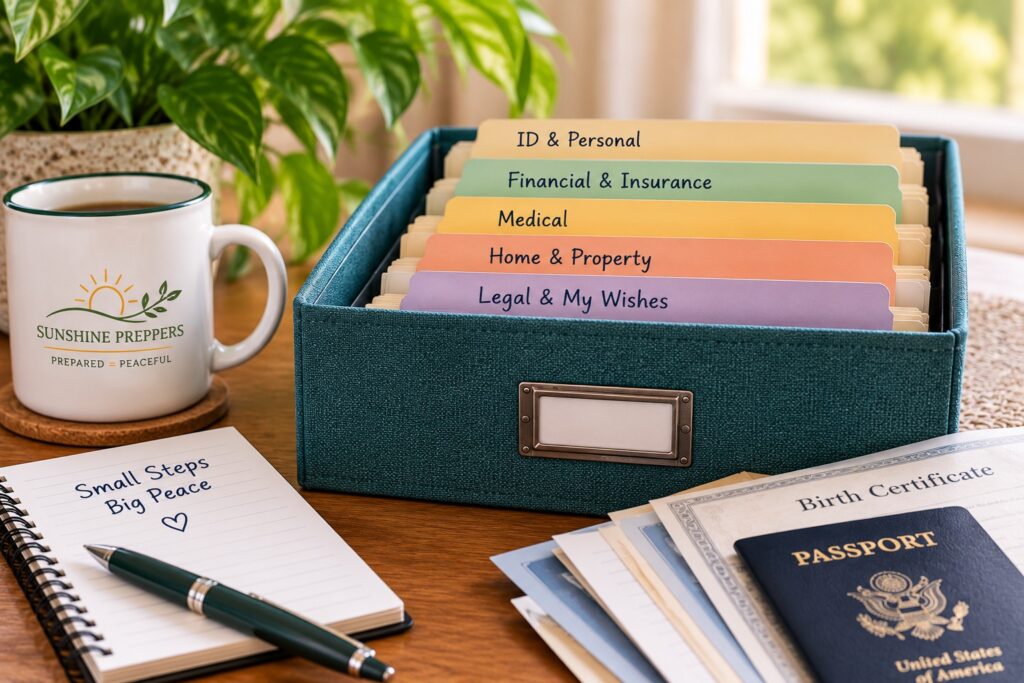
Scan important documents and store the files securely. You might use encrypted cloud storage, an external drive kept somewhere safe, or another secure method that works for your family.
The important thing is not to rely on one copy in one location.
If you’d like a more detailed guide, FEMA’s Emergency Financial First Aid Kit walks you through the financial, medical, household, and other important information you may want to gather and protect. It’s a free resource and a good next step if you’re ready to organize more than the basics.
Don’t Try to Do All of This Today
This is where I think preparedness can become unnecessarily overwhelming.
You read a list like this and suddenly think you need to spend an entire weekend creating color-coded binders and scanning 40 years of paperwork.
You don’t.
Start with one envelope, folder, or box.
Find your birth certificate.
Find your marriage certificate.
Find your insurance information.
Make a current medication list.
Take some pictures of your home.
Then keep going.
You can build your system a little at a time.
One More Important Step
Once you’ve organized everything, tell someone.
A beautiful emergency binder doesn’t help much if nobody knows it exists.
Choose someone you trust and make sure they know:
- Where you keep your important documents
- Where you store the originals
- How to access necessary digital information
- Who to contact in an emergency
You don’t have to give everyone access to everything.
But somebody besides you should know the plan.
Final Thoughts
This isn’t really about paperwork.
It’s about making a difficult day a little easier.
It’s knowing that if you need your insurance information after a storm, you can find it.
It’s knowing your medication list is current if you end up in the emergency room.
It’s knowing someone you trust could find the information they needed if you weren’t available to help them.
And yes, it’s knowing exactly where that marriage certificate is the next time someone asks for it.
You don’t need to organize your entire life today.
Find one important document and put it where it belongs.
Then find another.
Prepared doesn’t have to mean perfect.
It just means you’re a little more ready than you were yesterday.
Want an Easier Way to Get Your Family Prepared?
Download my free Simple Family Emergency Plan and get the important information organized before you need it.
Get the Free Emergency Plan