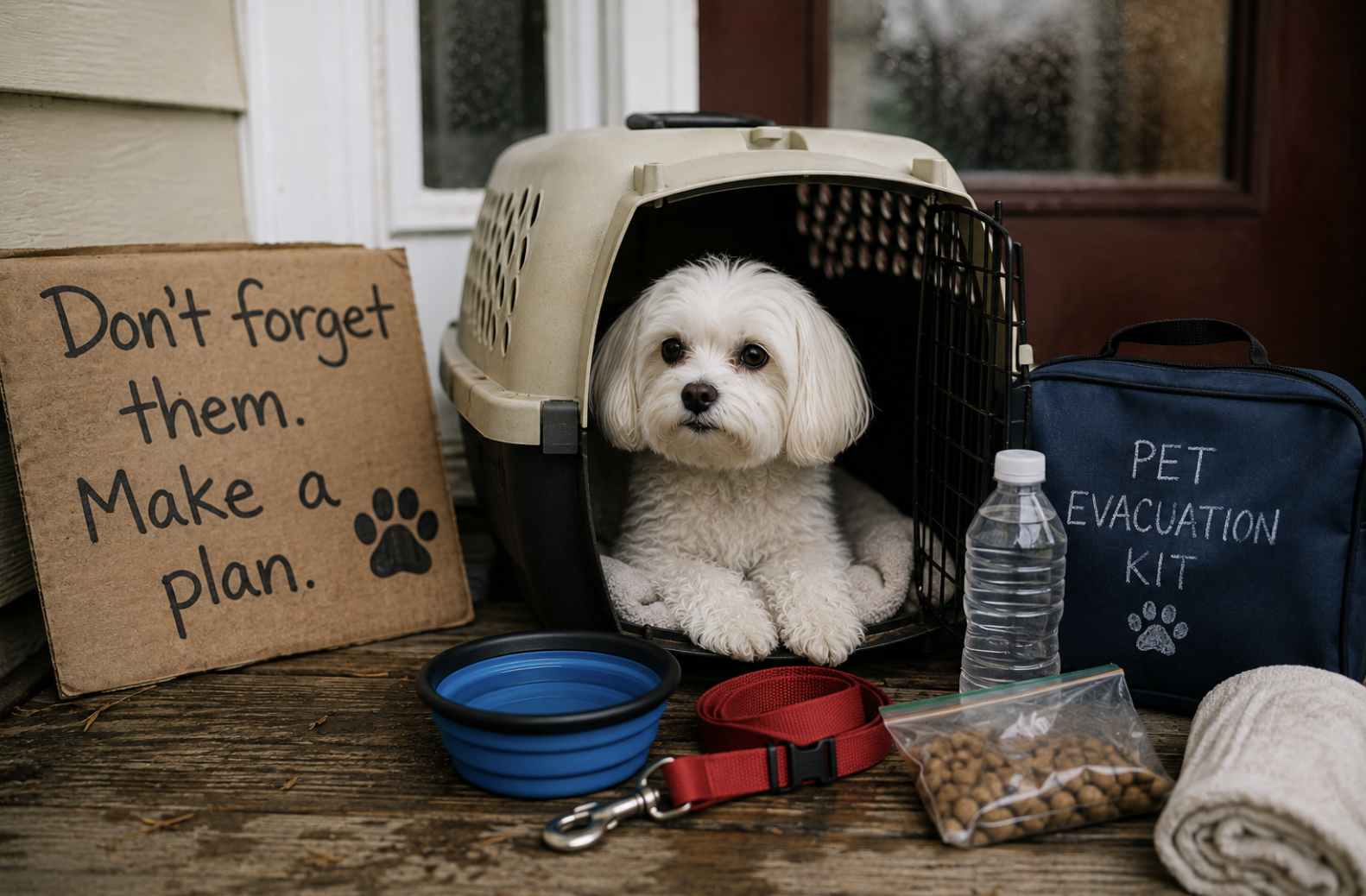
A little dog named Snowball changed the way America thought about pet evacuation.
In the days after Hurricane Katrina devastated New Orleans in 2005, thousands of people were evacuated from the horrendous conditions at the Superdome. They waited in the rain, crowded against police barricades, to board buses that would take them to safety in Houston.
Among them was a little boy holding his small white dog, Snowball.
Pets weren’t allowed on the buses.
Associated Press reporter Mary Foster witnessed what happened when a police officer took Snowball away from the boy. The child cried out his dog’s name over and over, sobbing until he vomited.
“Snowball! Snowball!”
Foster wrote about what she had witnessed, and the story traveled across the country.
Snowball became one small face of a much bigger problem exposed by Hurricane Katrina: What happens when people are told to evacuate, but their pets aren’t included in the plan?
\He was just one of many pets caught in the chaos following the storm. HumanePro’s The Storm That Changed Us tells more about what happened to people and their pets during Katrina and how the disaster changed animal emergency planning.
For many of us, leaving them behind simply isn’t an option.
Katrina Changed Pet Evacuation Planning
The lessons from Hurricane Katrina eventually helped change federal law.
Less than a month after Katrina, Congress introduced legislation that eventually became the Pets Evacuation and Transportation Standards (PETS) Act of 2006. President George W. Bush signed it into law on October 6, 2006.
The PETS Act requires state and local emergency preparedness plans to address the needs of people with household pets and service animals. Meeting this requirement helps communities qualify for certain FEMA disaster assistance.
But there’s something important to understand.
The PETS Act doesn’t mean you can take your pet to any emergency shelter.
Communities handle pet sheltering differently. Some shelters accept pets in designated areas. Others may have a separate location for animals. And some shelters do not accept household pets at all.
That’s why you need to build your pet evacuation plan before you’re told it’s time to leave.
If You Evacuate, Your Pets Evacuate Too
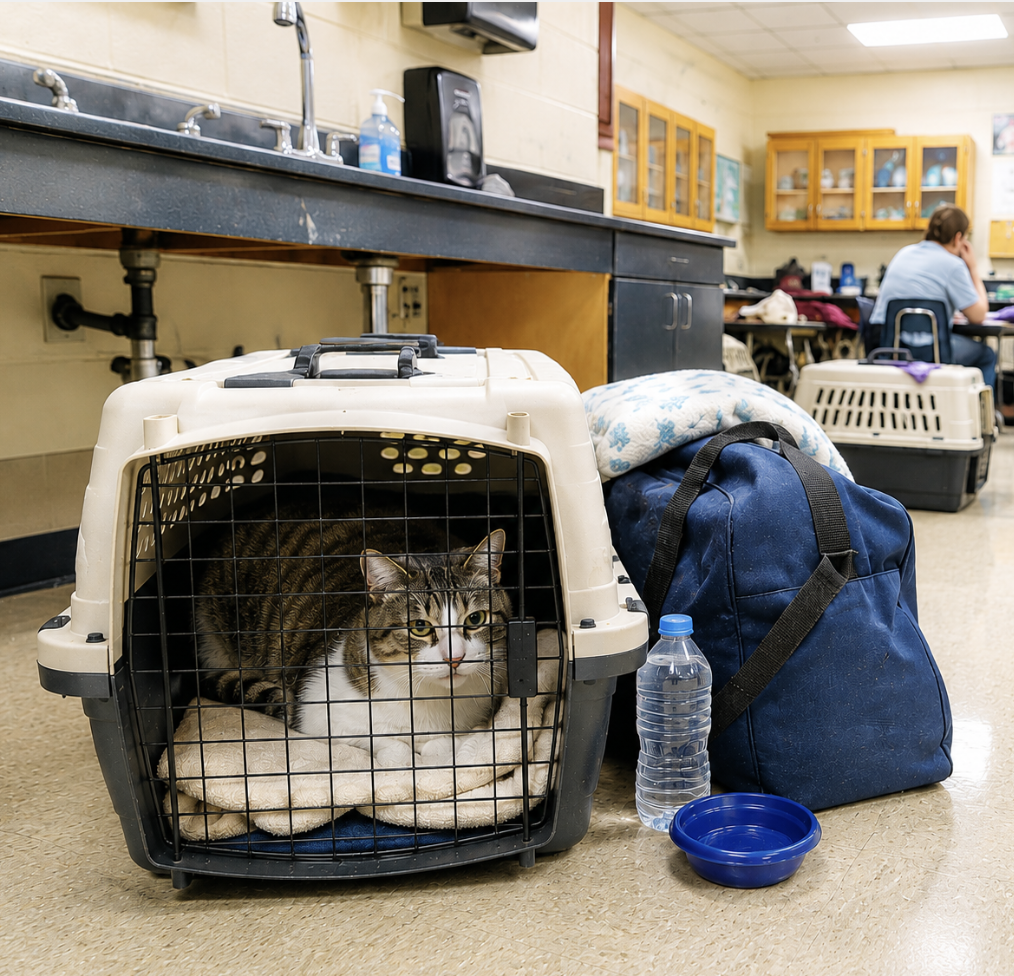
If it isn’t safe for you, it isn’t safe for them.
Don’t leave an animal behind to fend for itself during a hurricane, flood, wildfire or other emergency.
You may think you’ll only be gone for a few hours. But roads can close, officials can restrict neighborhoods, and conditions can change quickly. You may not be able to return home when you expect.
Your pets depend on you for food, water, shelter and safety. If you’re told to evacuate, your pet evacuation plan should include them.
Never assume you’ll be able to come back for them later.
Know Where You Can Take Your Pet
Before hurricane season—or whatever type of emergency is most likely where you live—find out how your community handles pets during an evacuation.
Here in Pinellas County, Florida, we have designated shelters that accept pets. Not every shelter does.
We’ve evacuated to one of those shelters with our cat, Lizzy.
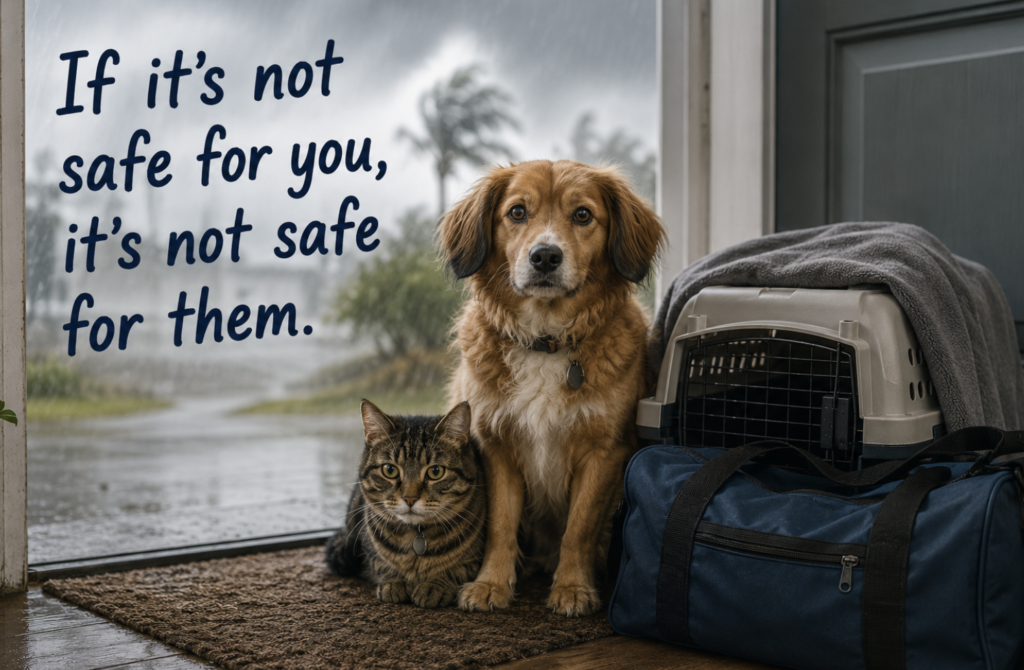
One thing I learned from that experience was not to assume the shelter would provide everything my pet needed. Remember, emergency shelters are often set up in schools, churches and other buildings that weren’t designed to house animals.
Lizzy ended up in a science classroom — a rather stinky science classroom, as I remember it.
The shelter didn’t provide cages or carriers for the pets people brought with them. We needed to come prepared with Lizzy’s carrier and everything she would need while we were there.
Pet-friendly doesn’t necessarily mean pet-equipped.
Check your local emergency management information ahead of time and find out:
- Which shelters accept pets?
- What kinds of pets are accepted?
- What documentation is required?
- Does your pet need to remain in a carrier?
- What supplies are you expected to provide?
- Are there any vaccination requirements?
And check again before you evacuate. Shelter locations, availability and requirements can change from one emergency to another. This is the heart of any pet evacuation plan: know where you’ll go before you have to leave.
Make Sure Your Pet Can Be Identified
Emergencies are chaotic. Doors come open. Fences come down. Frightened animals can behave differently than they normally do.
Your pet should have identification.
A collar with an identification tag is a good start, but I also strongly recommend microchipping your pet.
Then make sure the information connected to that microchip is current.
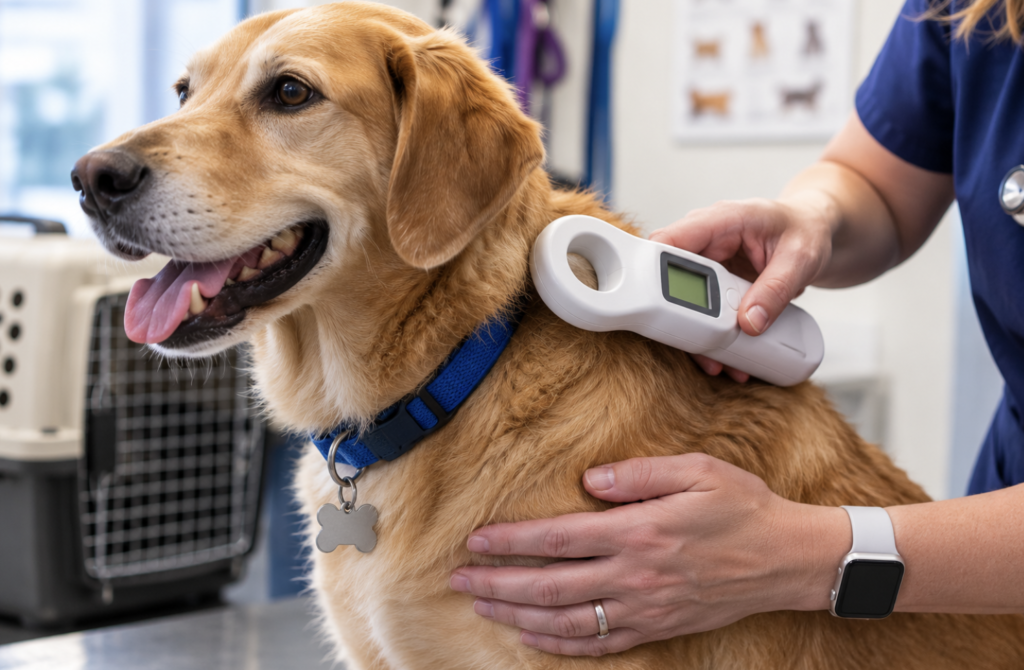
If you’ve moved or changed your telephone number since you microchipped your pet, updating that information is one of those little preparedness jobs you can take care of today.
Keep a recent photograph of your pet, too. Ideally, have a photograph of you with your pet. It can help establish ownership if you and your pet get separated.
Keep Your Pet’s Records Ready
Don’t wait until officials issue an evacuation order to start searching through drawers for veterinary paperwork.
Some pet-friendly shelters require proof of current vaccinations before admitting an animal.
Keep copies of important pet records with the rest of your emergency documents, including:
- Vaccination records
- Rabies certificate
- Veterinarian’s name and contact information
- Medication information
- Microchip number and registration information
Store a digital copy somewhere you can access from your phone for an extra backup.
Pack a Pet Evacuation Kit
Pack a bag just for your pet as part of your family’s emergency supplies.
You don’t need anything fancy. You need the things that will let you safely care for your pet for several days away from home.
Consider packing:
- Food
- Bottled water
- Food and water bowls
- Medications
- Leash and harness
- Collar with identification
- Carrier or crate
- Vaccination and veterinary records
- Waste bags for dogs or litter and a small litter pan for cats
- Paper towels and cleanup supplies
- A few towels
- A favorite blanket or small bed
- A familiar toy
- Recent photographs of your pet
- Any special supplies your individual pet needs
Rotate the food and medications just as you rotate the supplies in your family’s emergency kit.

And don’t overlook the carrier or crate.
Even if your dog normally rides happily in the car, or your cat rarely leaves the house, an emergency shelter is different. It’s an unfamiliar place, full of strange people, noises, smells and other frightened animals.
A secure carrier protects your pet — and everyone around you.
Have More Than One Pet Evacuation Option
A public shelter shouldn’t be your only plan.
Think about several places you might go if you have to evacuate.
A pet-friendly emergency shelter may be one option.
A pet-friendly hotel outside the evacuation zone may be another.
You might have friends or relatives who live in a safer area and are willing to take both you and your pets.
Your veterinarian or a boarding facility may also be part of your backup plan.
The important thing is knowing your options before you need them.
When an evacuation order comes, that’s not the time to begin calling hotels or trying to figure out which shelters accept animals.
They Are Part of the Family
I keep thinking about that little boy standing outside the Superdome calling for Snowball.
He wasn’t worried about federal emergency policy.
He didn’t know people across the country would repeat his story. He didn’t know Hurricane Katrina would eventually change the way communities plan for animals during disasters.
He just knew someone had taken his dog away.
Our pets depend on us to make decisions for them. They can’t pack their own food. They can’t grab their medication. They can’t look up which shelter will accept them.
That’s our job.
So when you’re making your family’s emergency plans, don’t add your pets as an afterthought.
Include them from the beginning.
Know where you’ll go.
Keep their records ready.
Pack their supplies.
Make sure they wear ID.
Because a good pet evacuation plan means that when it’s time to leave, everyone in your family is ready to go.
Including the ones with four paws.
Want an Easier Way to Get Your Family Prepared?
Download my free Simple Family Emergency Plan and get the important information organized before you need it.
Get the Free Emergency Plan